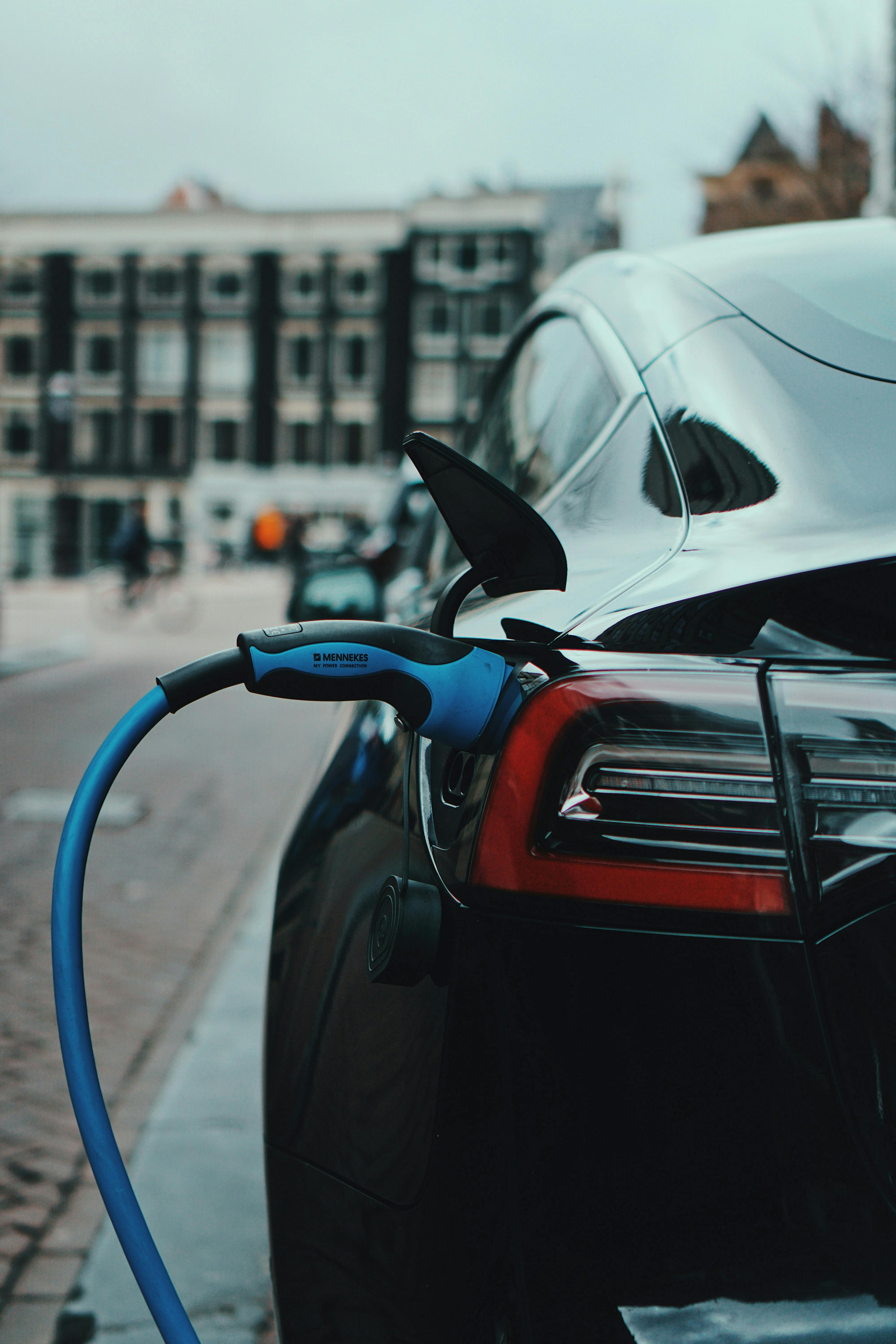
Electric Vehicles in Ireland: Tax Savings & Incentives

Summary
A practical guide to the main EV tax savings in Ireland for 2026.
Electric vehicles (EVs) are no longer niche in Ireland. Rising fuel costs, climate targets, and Government policy have pushed more drivers, employees, and businesses to consider switching to electric.
Tax plays a big role in that decision. The real cost of an EV isn’t just the sticker price, it’s shaped by Vehicle Registration Tax (VRT), motor tax, Benefit-in-Kind (BIK) if the car is provided by an employer, and how grants and reimbursements are treated for tax purposes.
As we move into 2026, some EV tax supports are confirmed to continue, while others are gradually being reduced or restructured. Understanding what still applies, and what no longer does, is key to avoiding disappointment and making informed decisions.
VRT relief for electric vehicles (what still applies)
Vehicle Registration Tax (VRT) is charged when a car is first registered in Ireland.
- EVs qualify for VRT relief rather than a full exemption.
- This relief has been gradually reduced over recent years as EV adoption has increased.
- As things stand, VRT relief for battery electric vehicles is scheduled to continue to the end of 2026, subject to annual Finance Acts.
How it works in practice
- VRT is calculated based on the Open Market Selling Price (OMSP) of the vehicle.
- The EV relief reduces the VRT amount payable, but it does not eliminate it entirely.
- The exact relief depends on the vehicle value and current VRT bands.
Important:
This relief is enacted law for now, but it is reviewed annually. Anyone planning a purchase in late 2026 should watch Budget announcements carefully.
Benefit-in-Kind (BIK) for electric company cars
If your employer provides you with a company car, Benefit-in-Kind (BIK) applies. BIK is treated as taxable income and increases the tax you pay through payroll.
EV-specific BIK treatment
- EVs benefit from more favourable BIK treatment than petrol and diesel cars.
- EV BIK is based on vehicle categories and mileage, rather than engine size.
- From 1 January 2026, zero-emission company cars fall into Category A1 for BIK, with the percentage depending on business mileage.
What’s changing for 2026?
- Temporary EV BIK reductions from earlier years have been phasing out.
- From 1 January 2026, EVs remain tax-advantaged, but they are not tax-free.
- EVs are not fully exempt from BIK in 2026, but Revenue applies Category A1 rates and OMV reductions (including an additional EV OMV reduction) that can significantly reduce the taxable benefit.
Simple example
- Petrol company car → higher BIK → more tax
- Electric company car → lower BIK → less Income Tax, USC and PRSI
Motor tax for electric vehicles
Motor tax remains one of the clearest EV benefits.
- EVs are subject to a flat annual motor tax of €120.
- This rate is confirmed and enacted for 2026.
- Petrol and diesel vehicles are taxed based on emissions and engine size, often costing significantly more.
EV grants and income tax: what’s taxable and what’s not
Vehicle purchase grants
- The SEAI EV grant reduces the cost of a new electric vehicle.
- It is not taxable income for private individuals.
- No Income Tax, USC or PRSI applies.
Home charger grants
- Home charger grants are also non-taxable.
- However, the cost of installing a charger is not tax-deductible for private individuals.
Employer-provided chargers
- If an employer pays for or reimburses home charging equipment, the tax treatment depends on how it’s provided.
- Poorly structured reimbursements may be taxable benefits.
Other EV-related tax points for 2026
- There is no income tax relief for purchasing an EV outright.
- Home electricity costs for charging are not deductible for private individuals.
- Businesses may deduct EV-related costs where they meet normal expense rules.
- Mileage reimbursements must follow Revenue-approved rates to remain tax-free.
Common EV tax mistakes
- Assuming EVs are “tax-free”
- Confusing grants with tax reliefs
- Ignoring BIK on company EVs
- Not checking the tax treatment of employer reimbursements
- Relying on outdated incentives that no longer apply
What’s confirmed for January 2026 (and what isn’t)
Confirmed / enacted
- €120 annual motor tax for EVs
- Continued VRT relief (subject to annual review)
- EVs remain in the lowest emissions category for BIK
Not confirmed / subject to future Budgets
- Any new EV-specific tax exemptions
- Incentive extensions beyond 2026
- Changes to grant levels after 2026
Step-by-step: how to evaluate EV tax savings
- Check the purchase price after the SEAI grant
- Estimate VRT payable using current reliefs
- Confirm annual motor tax (€120)
- If a company car, calculate the BIK impact
- Review employer reimbursements
- Compare after-tax cost with petrol or diesel
- Re-check rules if buying close to Budget time
Final word
Electric vehicles in Ireland still offer meaningful tax advantages in 2026, but the biggest benefits now come from lower running costs, reduced BIK, and predictable motor tax, rather than headline exemptions.
EV incentives can look straightforward, but the details matter, VRT relief, grant eligibility, and especially company-car BIK can add up to big money if they’re applied incorrectly. With the right setup, many drivers and businesses can reduce costs and avoid overpaying tax.
Irish Tax Hub can:
- Calculate your exact EV BIK (if it’s a company car) and check payroll accuracy
- Confirm what EV supports apply to you (VRT relief, grants, charger supports)
- Review reimbursements and charging arrangements so they’re treated correctly for tax
- Keep you fully compliant with Revenue and avoid costly mistakes
Thinking of switching to an EV (or already driving one through work)? Talk to Irish Tax Hub today - get the savings you’re entitled to and avoid paying more tax than you need.
Source: Revenue: Electric vehicles
Frequently Asked Questions
Common questions about Electric Vehicle Tax Benefits in Ireland. If you have a question that's not answered here, please email us at damien@irishtaxhub.ie
Electric vehicles in Ireland benefit from: VRT relief of up to €5,000 for new EVs with an OMSP under €40,000 (extended to end of 2026), annual motor tax of just €120, reduced BIK for company electric cars (OMV reduction of up to €30,000 in 2026), SEAI grants of up to €3,500 for new BEVs, and lower running costs through home charging.
For electric company cars in 2026, the Original Market Value (OMV) used to calculate BIK is reduced by €20,000 (EV-specific relief) plus €10,000 (universal vehicle relief) - a combined €30,000 reduction. A new zero-emission category (A1) also applies with BIK rates ranging from 6% to 15% depending on business mileage, lower than standard rates.
Yes, but at the lowest rate available. Battery Electric Vehicles (BEVs) pay €120 per year in motor tax - the lowest band. This applies regardless of the vehicle's power output or value. Plug-in hybrid electric vehicles (PHEVs) are taxed based on their CO2 emissions, not at the flat EV rate.
Yes, but with relief. For new battery electric vehicles with an OMSP up to €40,000, VRT relief of up to €5,000 applies (extended to 31 December 2026). Vehicles with an OMSP between €40,000 and €50,000 receive reduced relief, and vehicles above €50,000 receive no VRT relief. The standard VRT rate still applies to the balance.
Need help understanding the tax implications of an electric vehicle?
Contact us today and we get back to you with an answer.
This blog post is for informational purposes only and does not constitute tax, financial, or legal advice. Tax laws and regulations are subject to change and may vary based on individual circumstances. Readers are strongly encouraged to consult with a qualified tax professional or financial advisor before making decisions based on the information provided. We make no guarantee regarding the accuracy, completeness, or applicability of this content to your particular tax situation.
Found this article helpful? Like and share it with others
About the Author
Damien Roche, CTA, ACA
Chartered Tax Advisor & Chartered Accountant | Co-founder of Irish Tax Hub
Damien is a dual-qualified Chartered Tax Advisor (CTA) and Chartered Accountant (ACA), and co-founder of Irish Tax Hub. He spent over six years in Deloitte Ireland's income tax department before founding Irish Tax Hub to provide free tax tools, clear information, and transparent pricing for Irish taxpayers.
Related Posts

Company Car Tax in Ireland Explained for 2026

Company car tax in Ireland is a Benefit in Kind based on value, emissions, and mileage.

BIK Calculator Ireland
See how Benefits-in-Kind (BIK) like cars or health insurance affect your net pay.