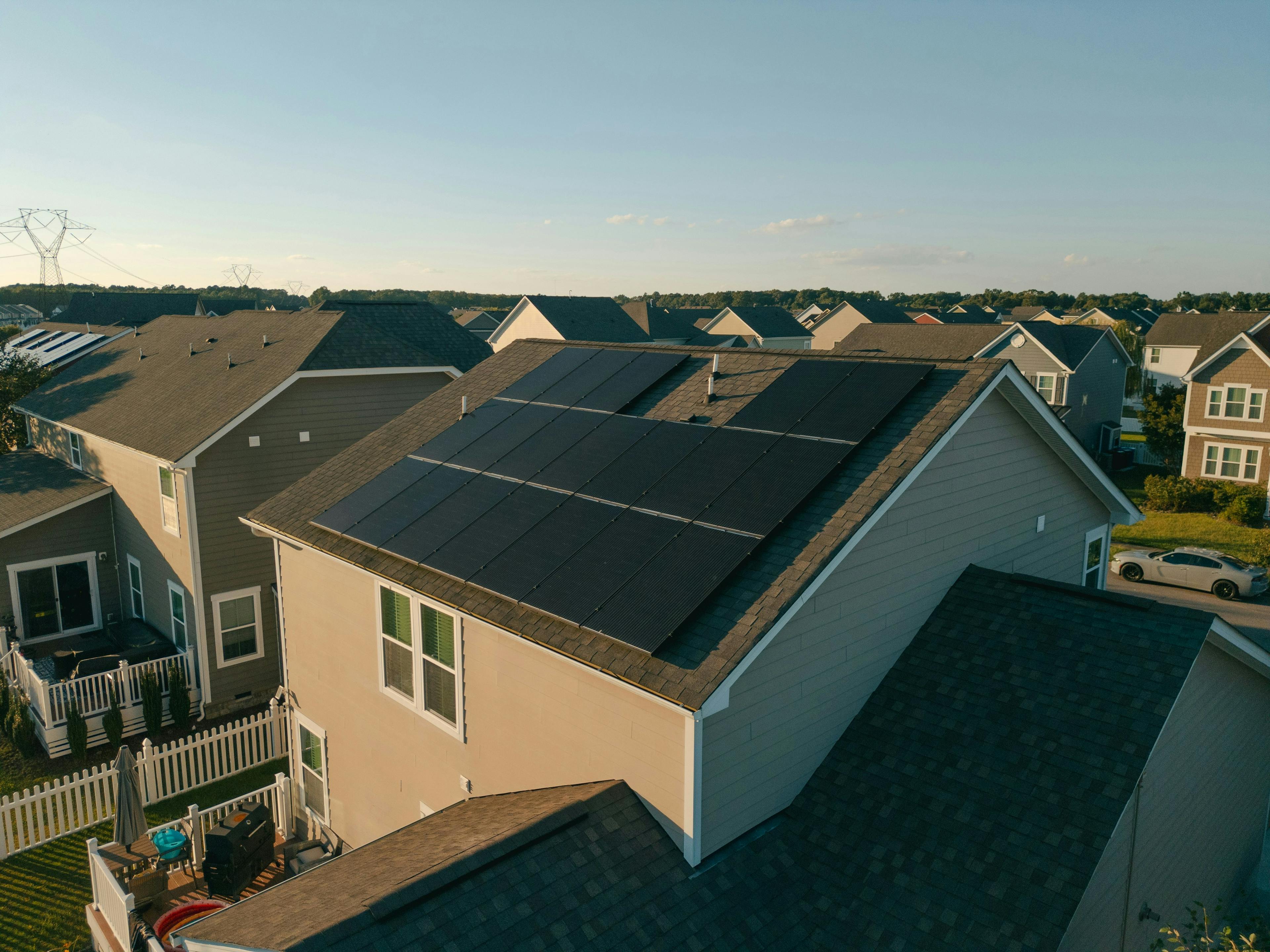
Solar Panels in Ireland: Tax Benefits & Grants

Summary
Thinking about solar panels in Ireland? Learn how VAT relief, SEAI grants, export payments and tax rules work.
Solar panels are no longer a niche upgrade in Ireland. Electricity costs, grid uncertainty, and long-term climate policy have made solar PV a serious consideration for homeowners, landlords, and small businesses.
But just like electric vehicles, the real cost and benefit of solar isn’t only the upfront price. VAT treatment, grants, export credits, and (for landlords) how Revenue treats retrofit spending can materially change the final outcome.
As we move into 2026, some supports are well established, but others are frequently misunderstood or applied incorrectly. Getting the tax side right can save money — and prevent nasty surprises later.
VAT on solar panels: one of the biggest “tax wins” (if invoiced correctly)
One of the most significant supports for home solar is the 0% VAT rate — but it’s important to understand how it actually applies.
What applies now
Revenue guidance confirms that from 1 May 2023, a zero rate of VAT applies to the supply and installation of solar panels on or adjacent to private dwellings.
That means:
- If your installer provides the panels and installs them under a single supply-and-install contract, the invoice can be 0% VAT.
- Revenue also confirms the zero rate can include ancillary equipment supplied and installed with the panels — which can include items like inverters and (in many cases) batteries when included as part of the same supply-and-install job.
The key limitation (where people go wrong)
If a company only supplies panels (no installation), Revenue’s examples show this can fall back to standard VAT.
Tax takeaway: The 0% VAT benefit is “baked into” the price only when the installation and invoicing meet Revenue’s rules.
SEAI Solar PV Grant: helpful — but not the same as a tax relief
The SEAI Solar PV Grant reduces the upfront cost of installing solar panels in a private home.
What’s confirmed (including 2026)
SEAI sets the grant structure and confirms that the maximum grant will remain €1,800 in 2026.
Citizens Information also reflects the same cap for 2026 and summarises how the grant works.
Important distinction: A grant is not a “tax deduction.”
You don’t claim it through Revenue as a personal tax relief — it reduces the installation cost upfront.
Selling electricity back to the grid: is it taxable?
This is one of the most common questions and one of the easiest places to accidentally misstate the rules.
How export payments work
Under Ireland’s microgeneration framework, households exporting excess electricity typically receive payment/credit from their supplier (commonly referred to as the Clean Export Guarantee (CEG)).
The tax rule you should state clearly
Budget 2026 confirms the €400 income tax disregard for household microgeneration income (from selling electricity back to the grid) is extended to 31 December 2028.
What that means in plain English
- Export income is not “automatically tax-free forever”
- But households benefit from a €400 per-year disregard
- If household export income exceeds that, the excess may become taxable and should be reviewed
Practical example
- A household receives €250–€400 in export credits in a year → typically covered by the disregard.
- A high exporter (large system + low usage) receives €650 → the amount above the disregard may need attention.
Solar panels and income tax: what “tax-efficient” really means
Solar is often described as “tax-efficient,” but that doesn’t mean you get an income tax refund just for installing panels.
For homeowners
For most homeowners:
- There’s no general income tax relief for buying solar panels
- The financial benefit usually comes from:
- 0% VAT (if done correctly)
- SEAI grant support
- lower bills + export credits (with the €400 disregard)
For landlords: there is a specific Revenue relief to know
Revenue provides a deduction for retrofitting expenditure for landlords of rented residential premises, where:
- the landlord has received an approved SEAI retrofitting grant
- works are carried out between 1 January 2023 and 31 December 2028
Revenue also sets:
- a deduction cap (generally the lesser of €10,000 or the qualifying expenditure amount after grants)
- and limits based on number of premises (Revenue’s current guidance references a maximum of two premises on the “how much relief” page, so don’t claim “three” unless you’re quoting an updated Revenue page that explicitly says so).
🚩 Common mistake:
Landlords either (a) assume solar is automatically deductible like a repair, or (b) miss the specific retrofit deduction entirely.
Common solar tax mistakes we see
- Assuming solar panels are “tax deductible” for homeowners
- Confusing SEAI grants with tax reliefs
- Saying export payments are tax-free in all cases (they’re subject to rules; €400 disregard applies)
- Landlords claiming the cost incorrectly (or missing the retrofit deduction entirely)
- Invoicing mistakes that risk losing the 0% VAT treatment
What’s changing for 2026 (and what isn’t)
Confirmed / ongoing into 2026
- 0% VAT for supply + install of solar panels for private dwellings (since 1 May 2023)
- SEAI grant maximum remains €1,800 in 2026
- Budget 2026 extends the €400 microgeneration income tax disregard to end-2028
- Landlord retrofitting deduction continues for works carried out up to 31 Dec 2028 (conditions apply)
Not guaranteed / always subject to annual change
- Grant levels beyond current commitments
- Any new personal income tax deduction for solar purchases
- Any new battery-specific tax incentives
How to approach solar from a tax perspective
Before installing
- Confirm the installer is doing a single supply-and-install contract so 0% VAT can apply
- Understand grants vs tax reliefs (they aren’t the same)
- Understand export credits and the €400 disregard
- If you’re a landlord: confirm whether you qualify for the retrofitting expenditure deduction
After installing
- Keep invoices, grant approval docs, and export payment records
- Review your position if your property use changes (owner-occupied → rental, etc.)
Final word
Solar panels in Ireland are financially attractive, but the biggest “tax benefits” are usually indirect: 0% VAT (when done correctly), grant support, and the €400 export-income disregard — not personal income tax relief.
For landlords, there may be additional relief available, but only under specific Revenue rules and typically tied to approved SEAI retrofitting grants.
How Irish Tax Hub can help
We can:
- Explain the real tax impact of installing solar panels
- Review landlord and business solar installations
- Clarify export income and VAT treatment
- Help you avoid common (and costly) mistakes
- Keep you compliant as rules change toward 2026
Thinking about installing solar panels — Talk to Irish Tax Hub today and make sure your solar savings aren’t quietly being lost to tax errors.
Frequently Asked Questions
Common questions about solar panels tax benefits and grants in Ireland. If you have a question that's not answered here, please email us at damien@irishtaxhub.ie
The SEAI Solar PV Grant provides €700 per kWp for the first 2kWp (up to €1,400), plus €200 for every additional kWp up to 4kWp. The maximum grant is €1,800 for a 4kWp system. Grant approval from SEAI is required before installation begins. The grant applies to homeowners of properties built before 2021.
Since May 2023, the supply and installation of solar panels on private dwellings is subject to 0% VAT. For non-residential properties, the standard VAT rate of 23% applies. This zero rate is in effect until at least 2027.
Electricity suppliers offer different rates for excess solar power exported to the grid under microgeneration. Rates vary by supplier and change regularly — compare the Clean Export Guarantee (CEG) rates offered by your energy provider. Payments for exported electricity up to €400 per year are tax-free for homeowners.
A typical residential solar PV system costs between €5,000 and €18,000 depending on the size. After the SEAI grant (up to €1,800), a standard 4kWp system typically costs around €4,000–€6,000 net. Larger systems (6–10kWp) cost more but generate more savings. Payback periods are typically 5–8 years.
Need help understanding the tax treatment of your solar panels?
Contact Damien today and he’ll take care of everything for you.
This blog post is for informational purposes only and does not constitute tax, financial, or legal advice. Tax laws and regulations are subject to change and may vary based on individual circumstances. Readers are strongly encouraged to consult with a qualified tax professional or financial advisor before making decisions based on the information provided. We make no guarantee regarding the accuracy, completeness, or applicability of this content to your particular tax situation.
Found this article helpful? Like and share it with others
About the Author
Damien Roche, CTA, ACA
Chartered Tax Advisor & Chartered Accountant | Co-founder of Irish Tax Hub
Damien is a dual-qualified Chartered Tax Advisor (CTA) and Chartered Accountant (ACA), and co-founder of Irish Tax Hub. He spent over six years in Deloitte Ireland's income tax department before founding Irish Tax Hub to provide free tax tools, clear information, and transparent pricing for Irish taxpayers.
Related Posts

Tax Credits in Ireland 2026 – Full List

This blog outlines all Irish tax credits for 2026, their updated values, and how much they can reduce your annual income tax bill.
Electric Vehicles in Ireland: Tax Savings & Incentives
A practical guide to the main EV tax savings in Ireland for 2026.